A launch monitor turns vague feels into hard data, whether you want carry distances on the range or a full simulator in the garage. We have ranked picks from pocket-money portables to ball-tracking units that rival pro fitting bays. Match the spend to how seriously you plan to use the numbers.
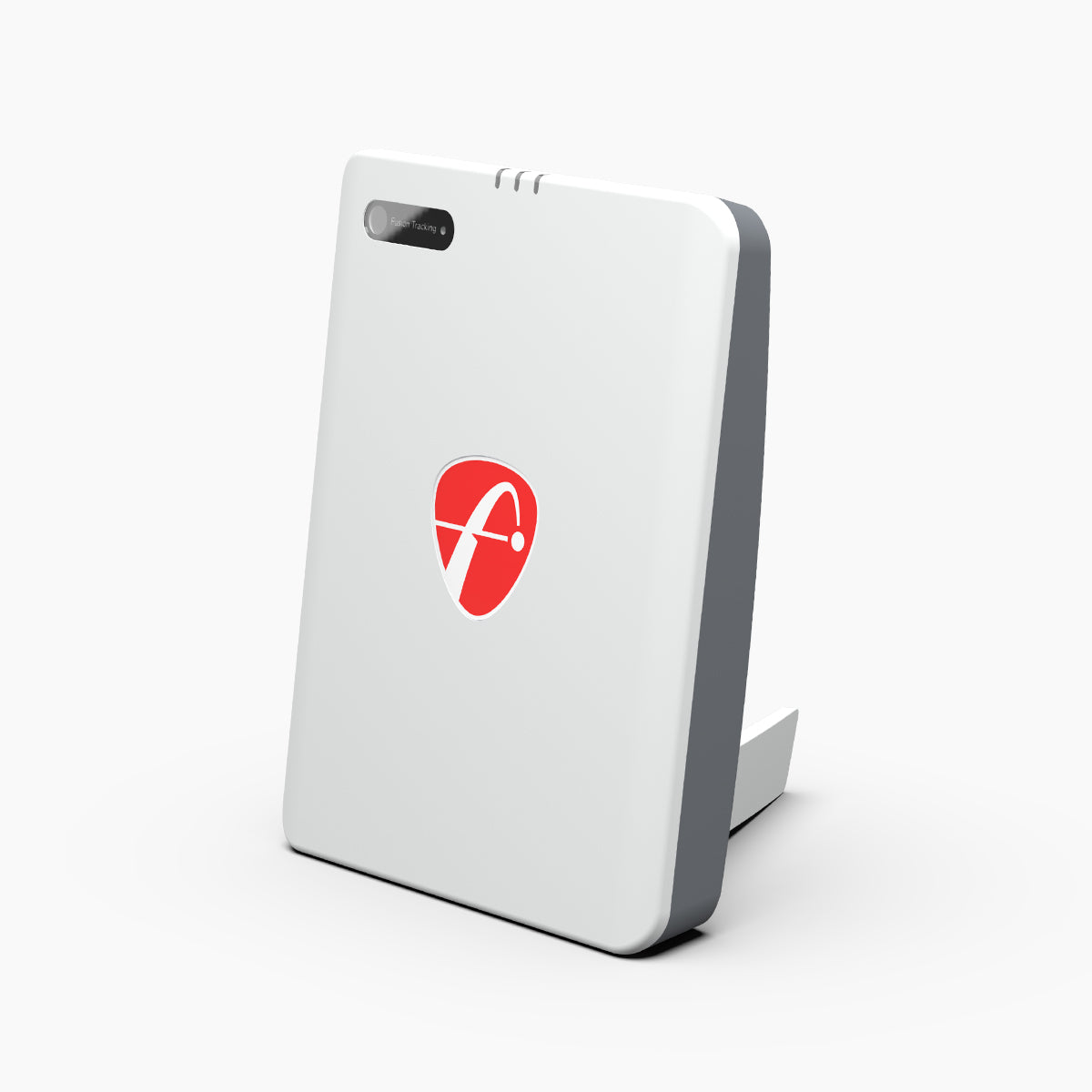
FlightScope's current consumer flagship launch monitor, replacing the discontinued Mevo Plus with a smaller body, a built-in camera and the same radar pedigree.
What's great
Accuracy on the numbers that matter, ball speed, carry, launch and spin, is strong enough that reviewers keep comparing it to units costing twice as much. Plugged In Golf rated it highly and The Hackers Paradise called it an easy recommendation. The combination of radar and camera tracking makes indoor performance far more dependable than radar-only rivals, and the included E6 courses mean you are playing simulated golf out of the box. The no-subscription model is the killer feature, with all core data parameters free for life. It is portable enough for the range, and multi-cam support lets you hook up phones for coaching angles.
Worth knowing
The full-fat experience costs extra, with the Pro Package and Face Impact Location add-ons taking the all-in price north of £1,800. Indoors it needs around 4 to 5 metres of room depth to track properly. Putting data is more of a bonus than a strength. E6 expansion courses are a paid upgrade too.
The verdict
The best value serious launch monitor of 2026, and the honest no-fees pricing makes it an easy pick over subscription-locked rivals.
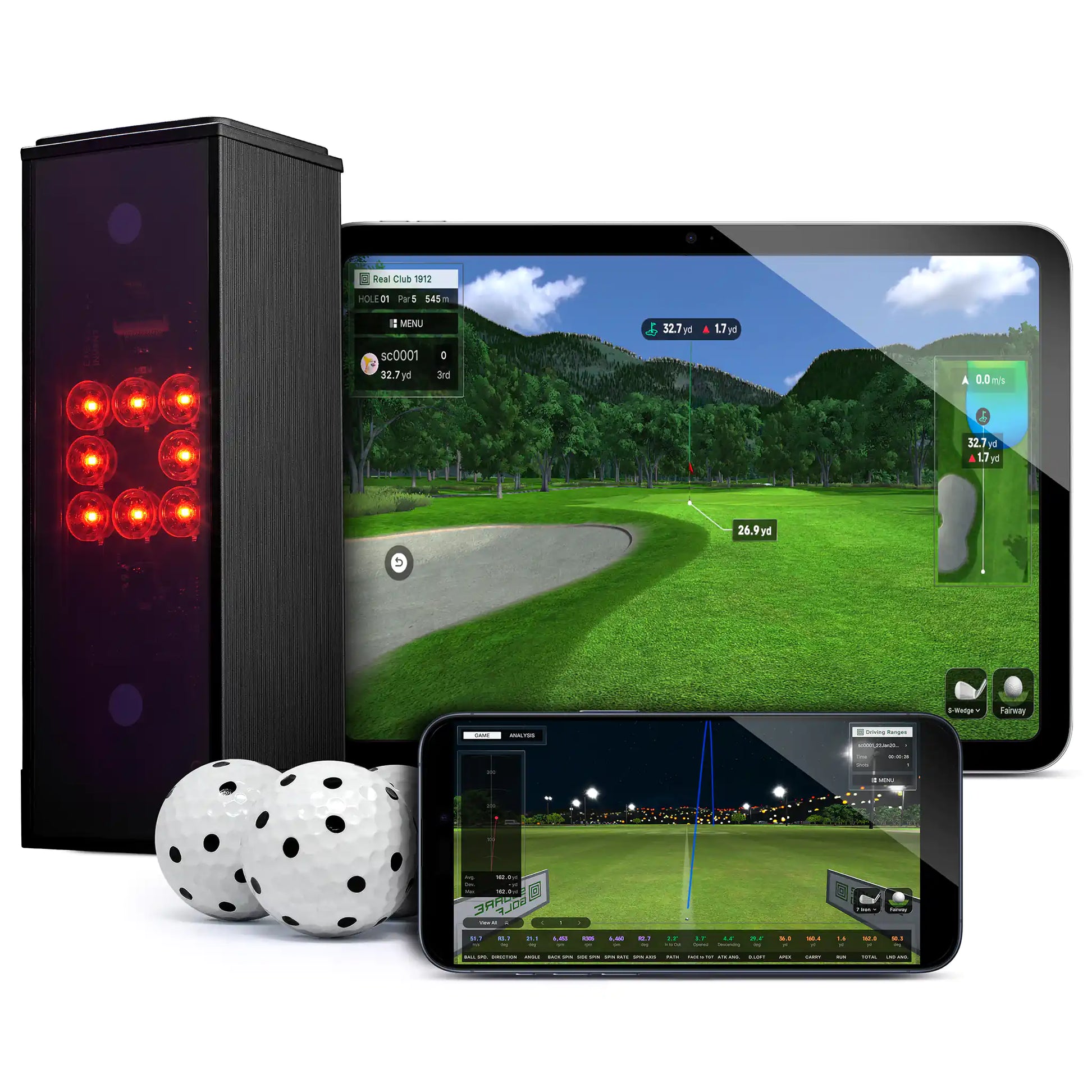
A compact camera-based launch monitor and simulator for indoor use, sold direct in the UK through Square Golf's own site.
What's great
Golf Monthly asked whether this is the best value launch monitor on the market, and it is a fair question. The data accuracy is genuinely impressive for the money, with shot response that feels instant, and getting club face and path data at this price is almost unheard of. The sim software is fun and well executed, short game practice actually works properly, and setup beside the ball means it suits tight rooms where radar units need depth behind you. The free practice modes mean most of what you will use it for costs nothing ongoing.
Worth knowing
Full sim rounds run on a credits system once your 1,000 welcome credits are gone, so factor a small running cost if you mainly play courses rather than practise. It is indoor only, and Square themselves warn that sunlight can damage the camera sensors, so this is not a range companion. You will also need a net, mat and a bit of space to get the best from it.
The verdict
The most complete budget home sim package out there, provided it never leaves the house.
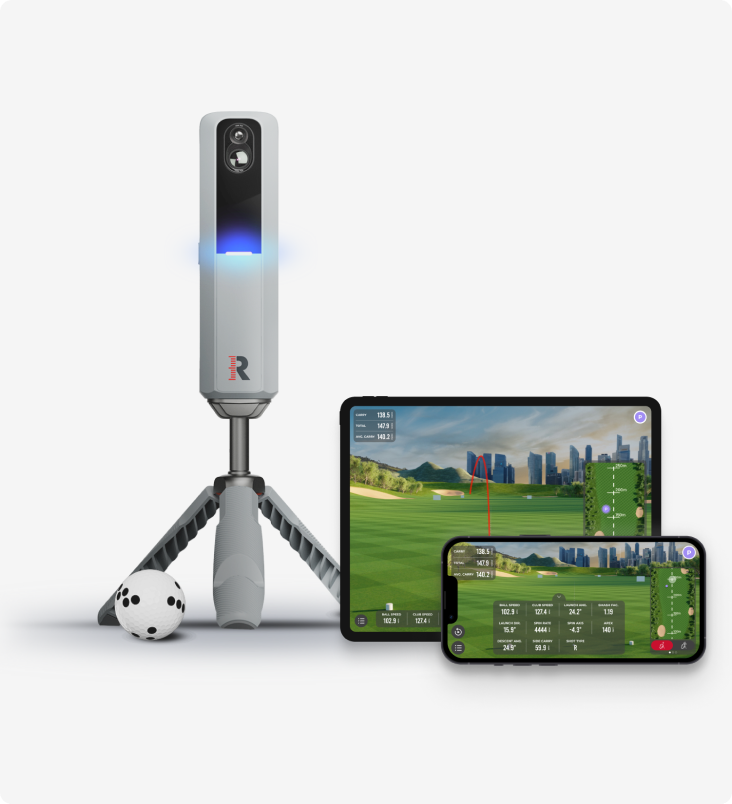
A portable camera-plus-radar launch monitor from Rapsodo that doubles as a home sim, aimed at golfers who want proper ball data without remortgaging the house for a Trackman or GCQuad.
What's great
For the money this thing punches well above its weight. Ball speed, launch angle and carry come back genuinely close to premium units on normal shots, and the dual cameras give you Shot Vision and Impact Vision video so you can actually see your strike. It's tidy, packs away small, and works indoors or out. Pair it with the dotted RPT balls and the spin numbers tighten up nicely too. As a practice and feedback tool for the price bracket, I rate it.
Worth knowing
Two things to know before you buy. First, the subscription: spin axis, club data and the 30,000-odd sim courses are locked behind a roughly 199-a-year membership once your free trial ends, so the sticker price isn't the full story. Second, accuracy has caveats. Spin is only trustworthy with the special dotted balls, longer shots (driver, anything past 200 yards) can read short by 15 to 20 yards, and it's fussy about lighting and indoor space. Some owners also hit connectivity gremlins. Not the unit if you want plug-and-play tour-level precision.
The verdict
A cracking value launch monitor that gets you 90 percent of the way to the expensive kit, as long as you accept the dotted-ball faff and the annual subscription. I'd buy it with eyes open, not as a Trackman killer.
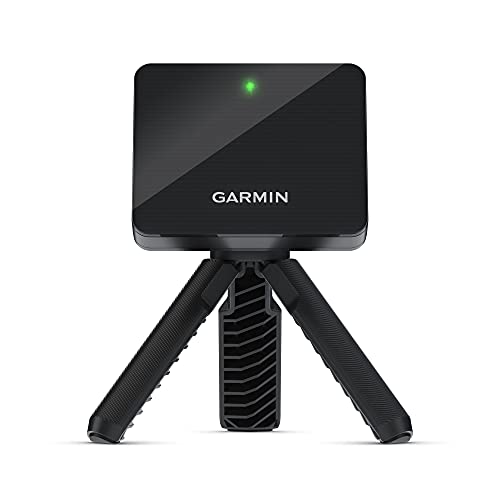
The Garmin Approach R10 is a pocket-sized radar launch monitor aimed at the golfer who wants real data, range practice, and a basic home sim setup without remortgaging the house.
What's great
For the money, it punches miles above its weight. Outdoors, where the radar can watch the whole ball flight, it goes toe to toe with launch monitors costing three or four times as much, ball speed and launch angle are genuinely tight. It's tiny (about the size of a deck of cards), the battery lasts a full session, setup with the included phone mount takes two minutes, and every shot logs automatically so you can actually see your dispersion improve. Firmware updates over the years have quietly fixed a lot of the early wobble.
Worth knowing
It's not perfect and I won't pretend it is. Spin is the weak spot, to get trustworthy spin indoors you need special Titleist RCT balls (not included, and useless outdoors where you can't fetch them), otherwise spin and the resulting shot shape are guesswork. Most numbers are calculated, not measured, so club path and face readings can wander. Indoors it sits behind you and wants real depth and ceiling height, cramped garages struggle. The app feels dated, and the genuinely useful sim features sit behind a yearly Garmin membership.
The verdict
If you mostly hit outdoors and want honest data plus a bit of home sim fun, the R10 is still the best bang-for-buck launch monitor going. Just buy the RCT balls and accept the spin caveats if you're going indoors.
A doppler radar launch monitor with a built-in screen and remote, aimed at the average club golfer who wants real numbers at the range or in the garage without a monthly subscription.
What's great
The headline trick is the bright built-in screen and pocket remote, so you get carry, ball speed, smash and apex called out without bending over a phone every shot. From wedges up to mid-irons it's genuinely sharp, reviewers had it within a couple of yards of a Bushnell Launch Pro and Foresight GCQuad, which is mad for the money. It barely misses a shot indoors or out, only needs about five feet of space behind you, and there's no subscription holding the data hostage like a Rapsodo. As a standalone range toy and basic sim unit (E6 Connect) it punches well above its price.
Worth knowing
The driver is where it falls over. Reviewers saw distances off by 20 yards or more on roughly half their drives, and spin going haywire (think 7,000+ rpm radar readings versus a believable 3,300 on a GC3). Spin in general is the weak metric, varying by hundreds of rpm shot to shot. The MySwingCaddie app is fiddly and a step behind rivals, there's no club path, face angle or angle of attack, and the protective case isn't even in the box. Serious fitters and low handicappers will outgrow it fast.
The verdict
If you want honest iron and wedge numbers and a no-faff screen for range or garage work, I rate the SC4 as about the best value going. Just don't trust it on the big stick, and don't buy it expecting fitter-grade spin data.
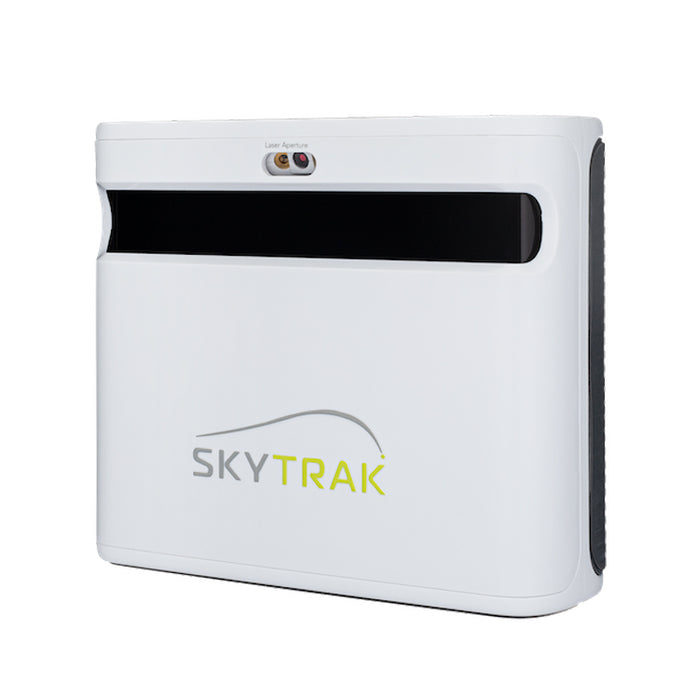
A photometric launch monitor that now adds dual Doppler radar, so for the first time the SkyTrak line gives you real club data (head speed, path, face angle, smash) alongside its long-trusted ball flight numbers. It sits in the gap between cheap toys and the 10k-plus Foresight and Trackman units, aimed squarely at the golfer building a room or garage bay.
What's great
The bang for buck is genuinely hard to beat. Independent testing (independent testers, Plugged In Golf) found ball and club speeds usually within 1 mph, launch within a degree and spin within a couple hundred RPM of the GCQuad on irons. It runs the widest software ecosystem of any unit at this price, so it scales from pure practice into a full simulator.
Worth knowing
Driver data is the weak spot, with carry running roughly 7 to 9 percent short of a GCQuad in testing, so don't treat it as gospel for big sticks. It is built for indoors and accuracy drops off noticeably outside. There is a 2 to 3 second shot delay, occasional missed reads, and the best courses and modes sit behind a yearly subscription. First-time setup can also be fiddly.
The verdict
If you want near-premium numbers without remortgaging, this is the smart buy and the obvious heart of a home sim. Just go in knowing it is an indoor iron-and-wedge weapon first, and that driver figures and the subscription are the compromises you make for the price.
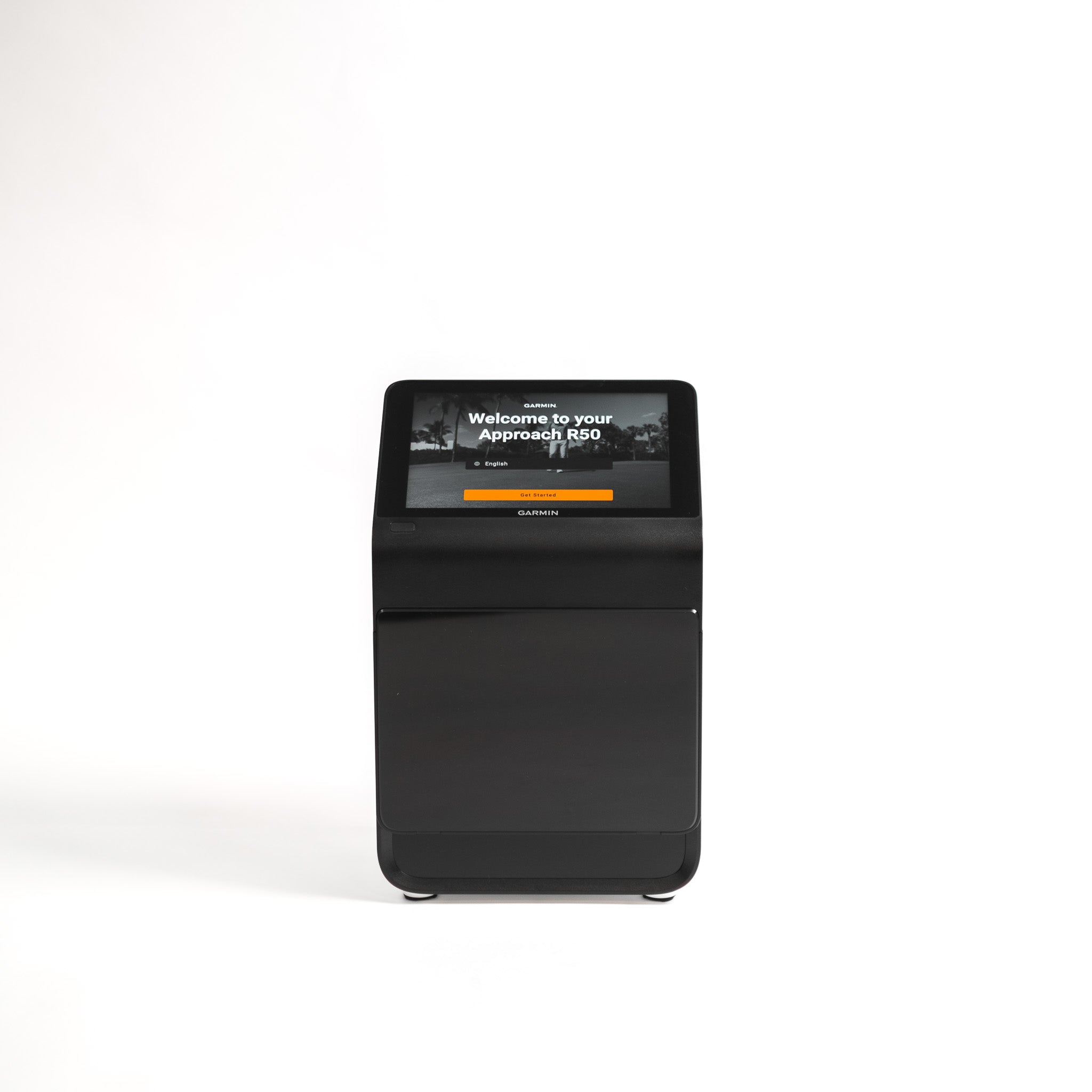
Garmin's premium photometric launch monitor and simulator. Three cameras read ball and club data, and a 10in colour touchscreen is built straight into the unit, so it runs Home Tee Hero virtual rounds and shows your numbers without any external laptop, tablet or phone. It works indoors with a net or screen and outdoors on the range, and packs into an included carry case.
What's great
The built-in screen is the headline. Most launch monitors in this bracket need a separate device to be useful, and the R50 just works out of the box, which makes casual sessions far less of a faff. Data is well-regarded for an optical unit, you get a full 15-plus metrics including spin, and the 43,000-course library plus four-player support makes it a proper social sim. Battery and portability mean it doubles as a range tool.
Worth knowing
It is a serious chunk of money at 4299, and the value-add features lean on a paid Garmin Golf membership, so budget for an ongoing subscription. To capture full club data you need to stick fiducial markers on your clubs, which is fiddly and easy to forget. The touchscreen sits low to the ground, so you will be kneeling or bending to change settings mid-session, and third-party sim software integration and left or right-handed player switching are still rough edges. Like all camera-based units it wants adequate space and decent lighting to read consistently.
The verdict
If you want one box that does everything and you will actually use the simulator side, the R50 is one of the most convenient premium options going. Just go in clear-eyed about the markers, the subscription and the kneeling, and only pull the trigger if the all-in-one screen is worth the premium to you over a cheaper monitor plus a laptop.